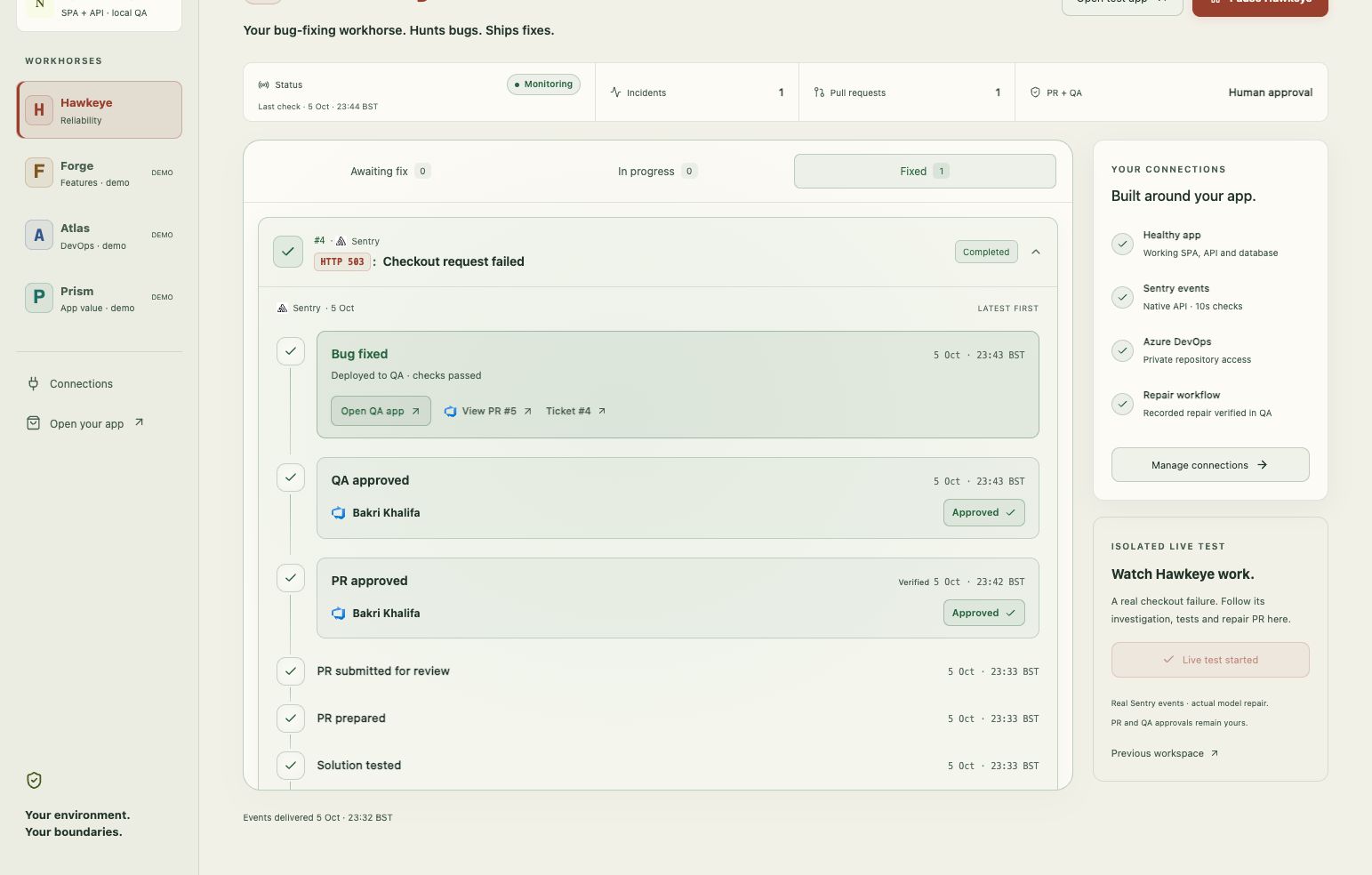
Start with a real failure in a test app.
A deliberately introduced fault made checkout fail when no voucher was supplied. The test app returned an HTTP 503 error, which Hawkeye received through Sentry’s API. The investigation and repair ran within an isolated test scope.
Repair the code. Keep the tests.
The AI-assisted repair addressed the missing-voucher handling. Before the change, five of the 13 tests failed. After the repair, all 13 passed with the test suite unchanged. Hawkeye created a linked Azure DevOps issue and pull request so the proposed change could be reviewed.
Keep approval in human hands.
An independent human review and the required branch checks preceded the merge of the tested code. A fresh, separate human approval then authorised deployment to isolated local Docker QA. Code approval and QA permission were recorded as distinct decisions.
Check the working result.
Local QA checks confirmed readiness, checkout without a voucher, retrieval of the saved order and a single inventory decrement. A separate browser checkout also succeeded, emptied the basket and reduced the item’s stock by one. The dashboard recorded the incident as completed.
What this demonstrates.
This recorded run shows a connected path from a monitored error to a tested, reviewed repair and a verified local QA result. Its scope was one controlled defect in our own fictional application. It involved no client production systems or live payments, and it does not establish performance across other defects or environments.
A few useful answers.
Was Northwind a client project?
No. Northwind is the fictional retail application used for our internal engineering tests. This page documents our own demonstration, with test orders and inventory.
Did this run deploy to production?
No. The approved deployment ran in isolated local Docker QA. The code review, separate QA approval and successful checks apply to that recorded test; production deployment was outside its scope.